Welcome to WordPress. This is your first post. Edit or delete it, then start writing!
Released in 1982 and directed by Ridley Scott, Blade Runner is widely regarded as a cornerstone of modern science fiction. Loosely adapted from Philip K. Dick’s 1968 novel Do Androids Dream of Electric Sheep?, the film struggled at the box office during its initial release but has since attained legendary status. It fundamentally redefined the visual aesthetic of the future and established the cyber-noir subgenre.
Set in a dystopian, rain-slicked Los Angeles, the narrative follows Rick Deckard (played by Harrison Ford), a burned-out cop known as a “blade runner.” Deckard’s assignment is to track down and “retire” (assassinate) four escaped Replicants—highly advanced bioengineered humanoids designed by the Tyrell Corporation for hazardous off-world labor. Led by the enigmatic and highly intelligent Roy Batty (Rutger Hauer), these specific Replicants have returned to Earth with a desperate, deeply human goal: to find their creator and demand an extension on their hardcoded four-year lifespans.
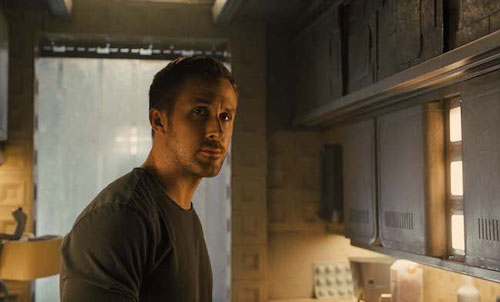
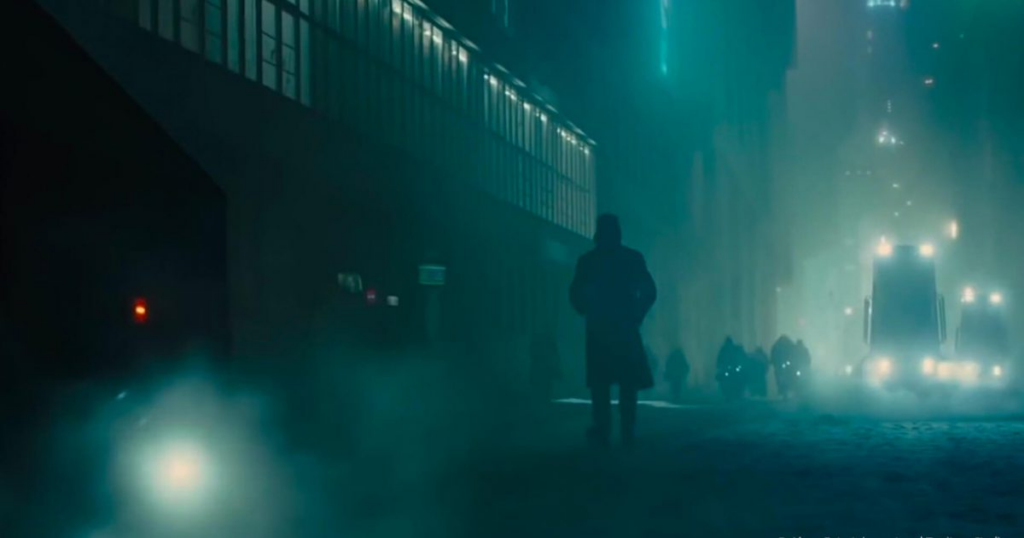
A man standing in his kitchen, questioning his life.
At its core, Blade Runner is an exploration of existentialism, memory, and what truly defines humanity. As Deckard hunts his targets, the lines between human and machine blur. The Replicants exhibit intense emotions—fear, love, grief, and a fierce desire to live—while the human society around them appears cold, mechanical, and detached. This thematic ambiguity is heightened by Deckard’s relationship with Rachael (Sean Young), an advanced Replicant who initially believes she is human because she possesses implanted childhood memories.
Visually, the film is a masterclass in world-building. Jordan Cronenweth’s cinematography combines classic 1940s film noir elements—such as heavy shadows, Venetian blinds, and shafts of light—with a decaying, high-tech future. Los Angeles is depicted as a crowded, hyper-commercialized metropolis dominated by massive glowing billboards, flying vehicles known as “spinners,” and towering, pyramid-like corporate architecture. This oppressive atmosphere is perfectly complemented by Vangelis’s iconic electronic score, which blends futuristic synthesizers with melancholic jazz melodies to evoke a profound sense of loneliness.
The film’s climax features one of the most celebrated monologues in cinematic history. Defeating Deckard in physical combat, a dying Roy Batty chooses to save the blade runner’s life rather than end it. Sitting in the pouring rain, Batty laments that his unique experiences—”all those moments”—will soon be “lost in time, like tears in rain.” In this final act of grace, the machine proves itself capable of ultimate empathy, leaving Deckard, and the audience, to question who the real monster is.
Blade Runner survives as a timeless masterpiece because it refuses to offer easy answers. Through its stunning visuals, haunting soundtrack, and philosophical depth, it forces us to look into the mirror of the future and contemplate the fragile nature of our own existence.